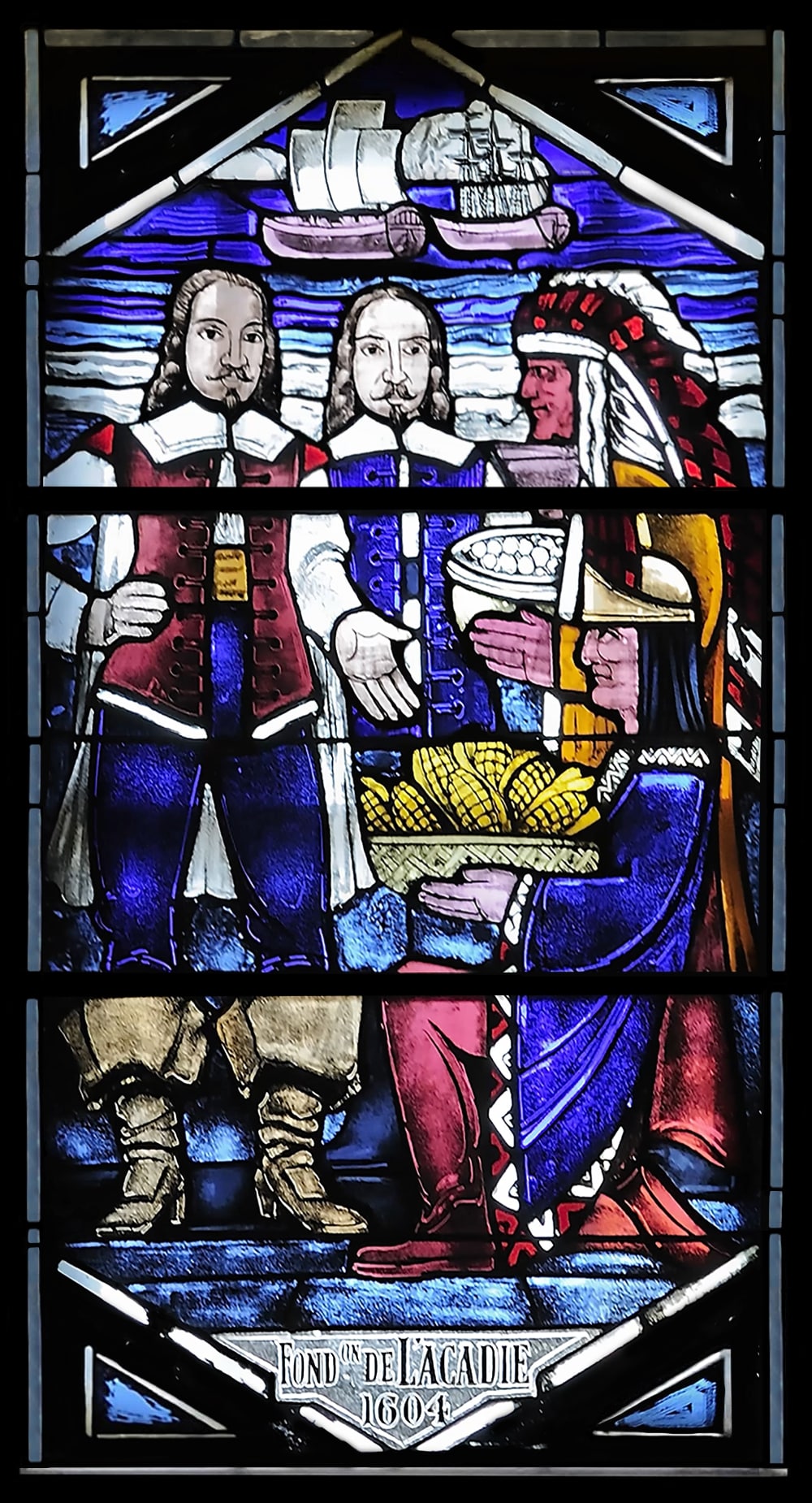
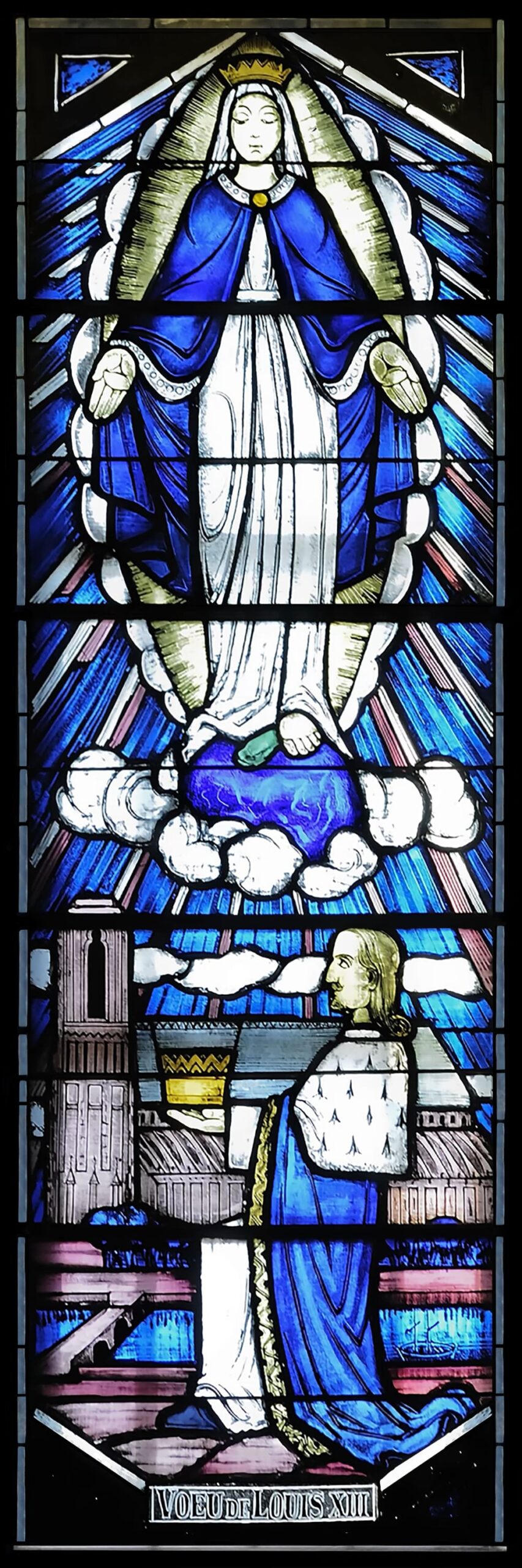
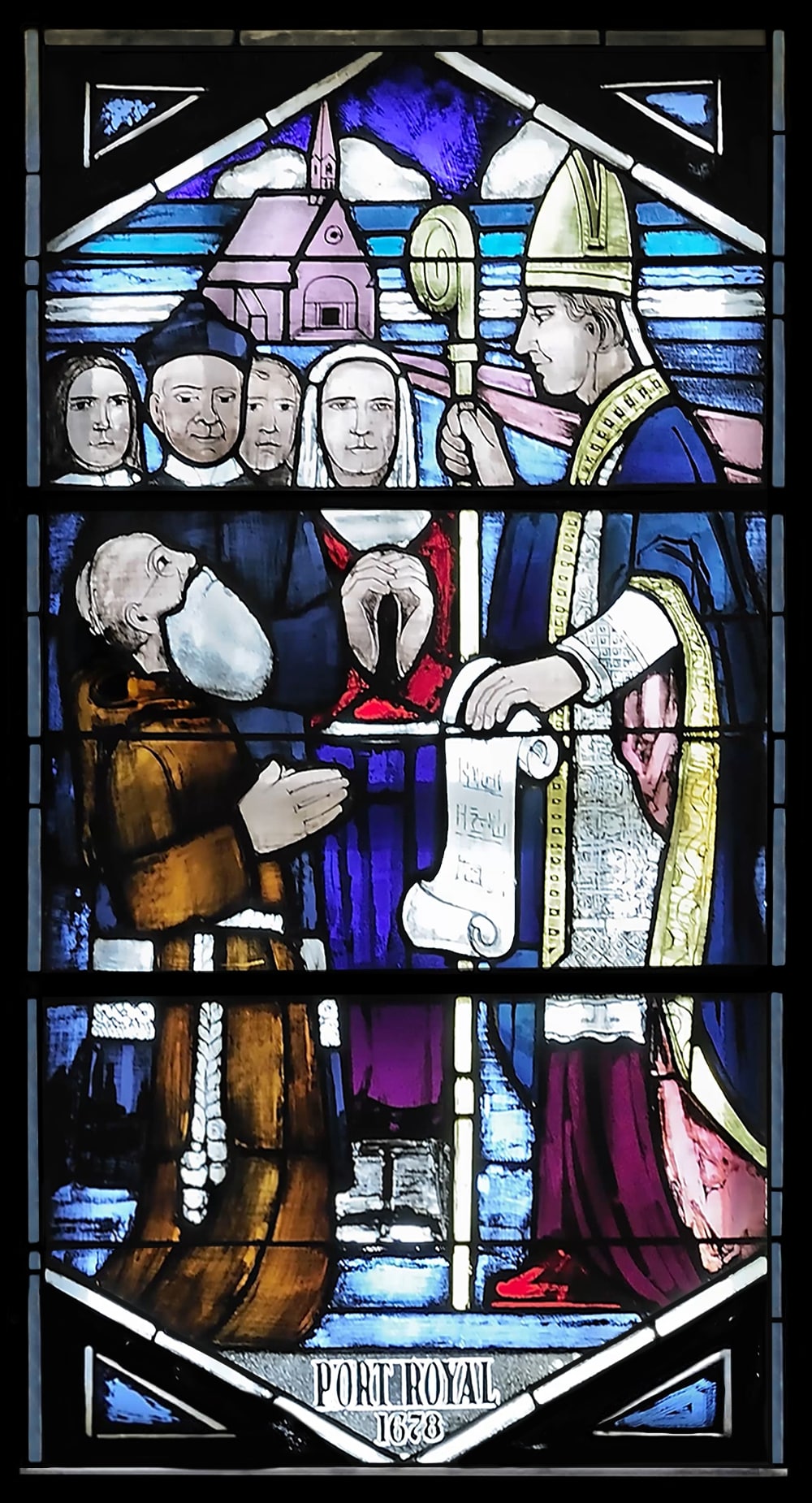
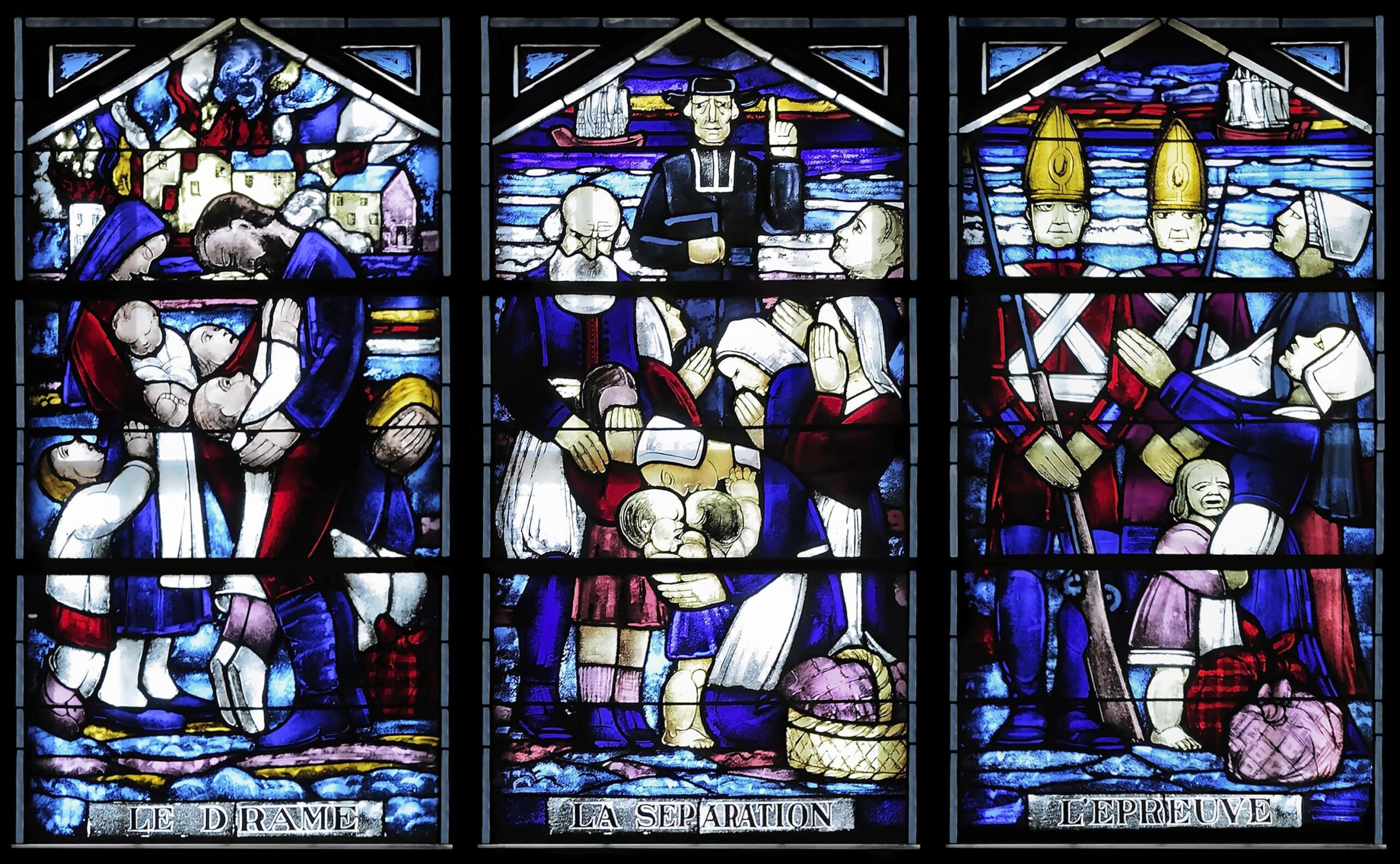
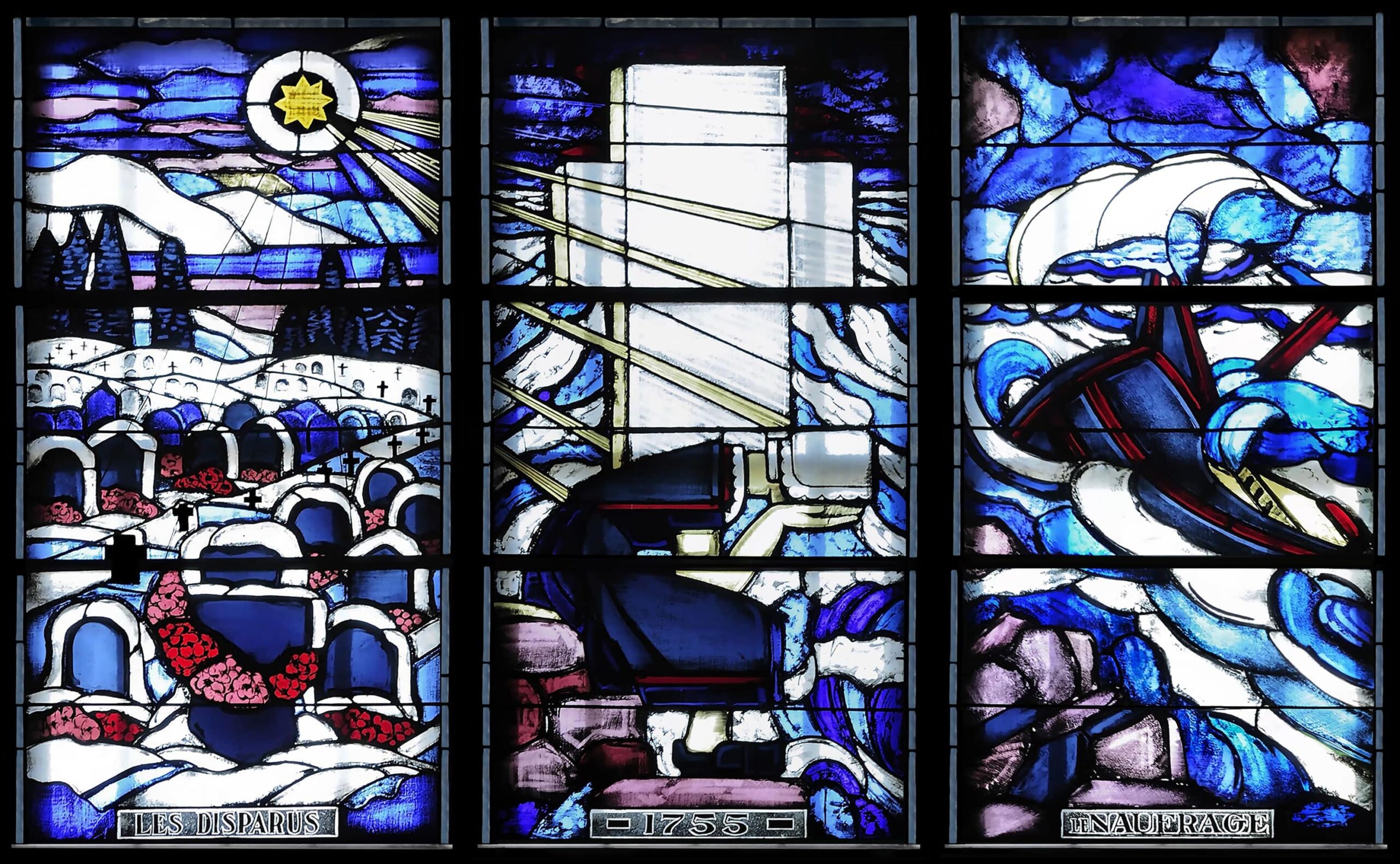
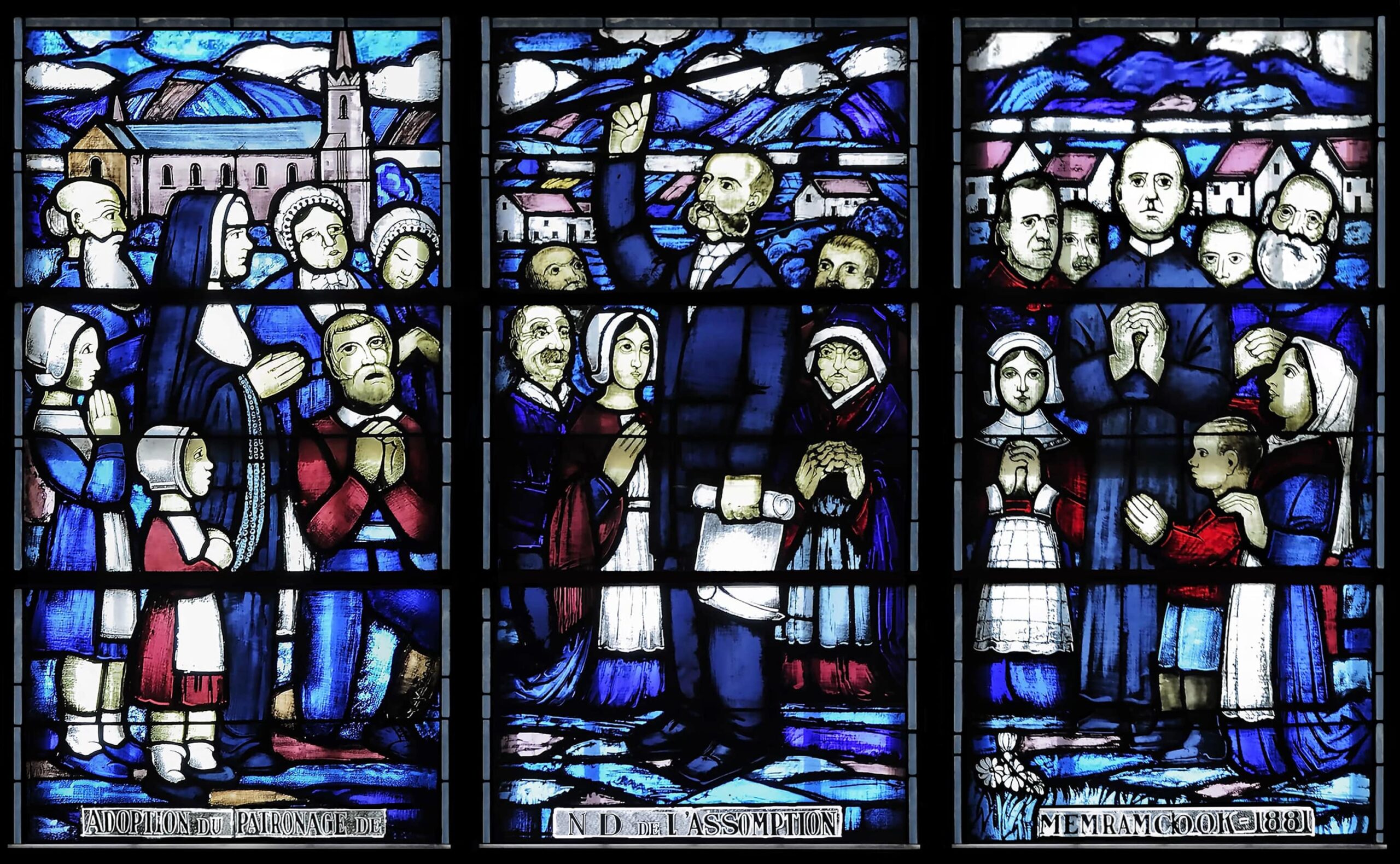
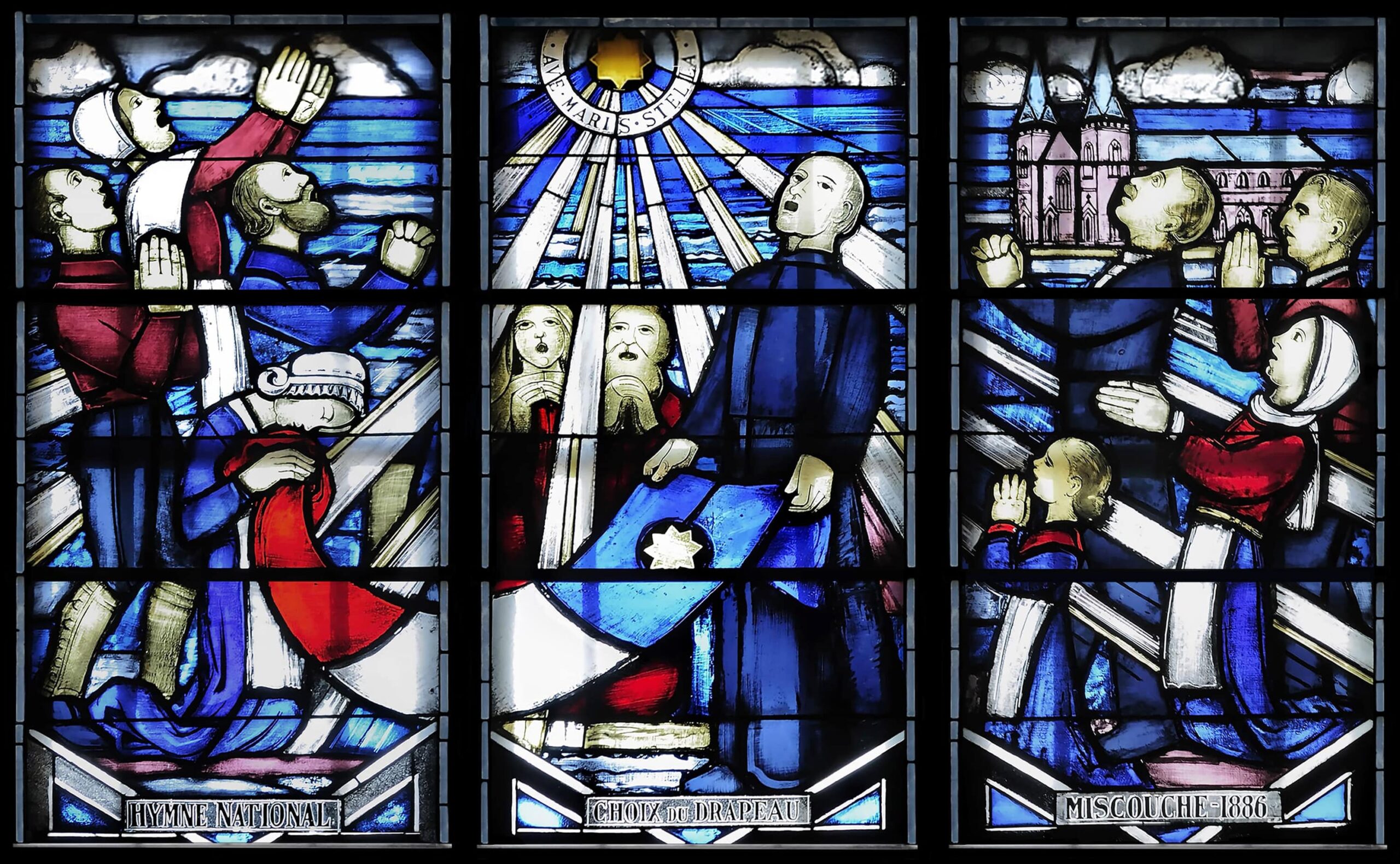
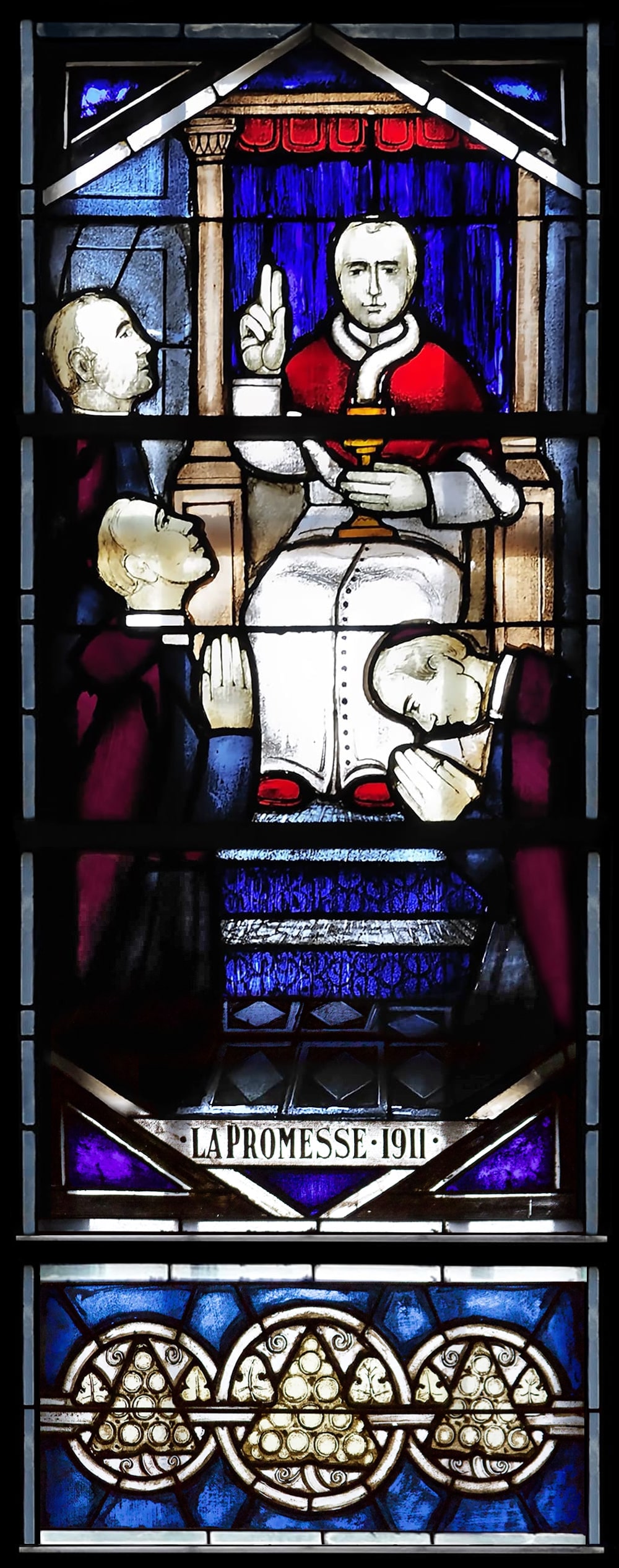
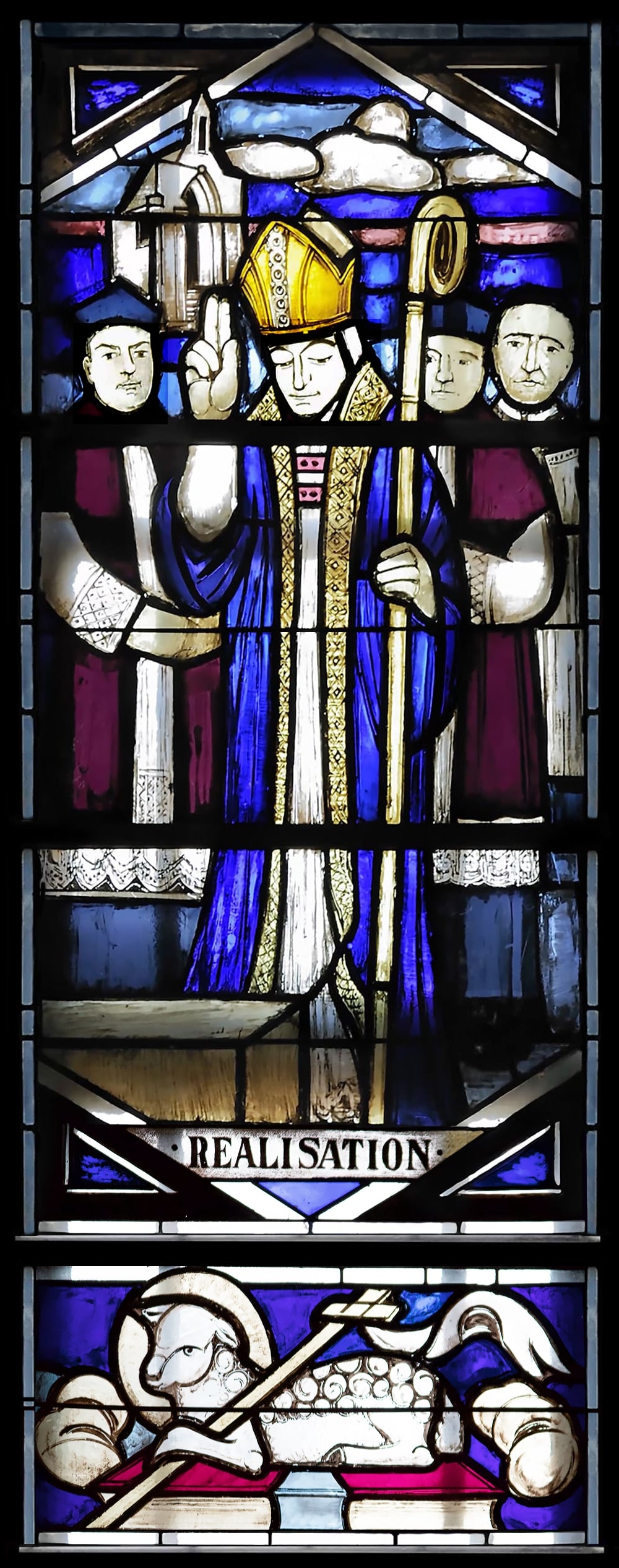
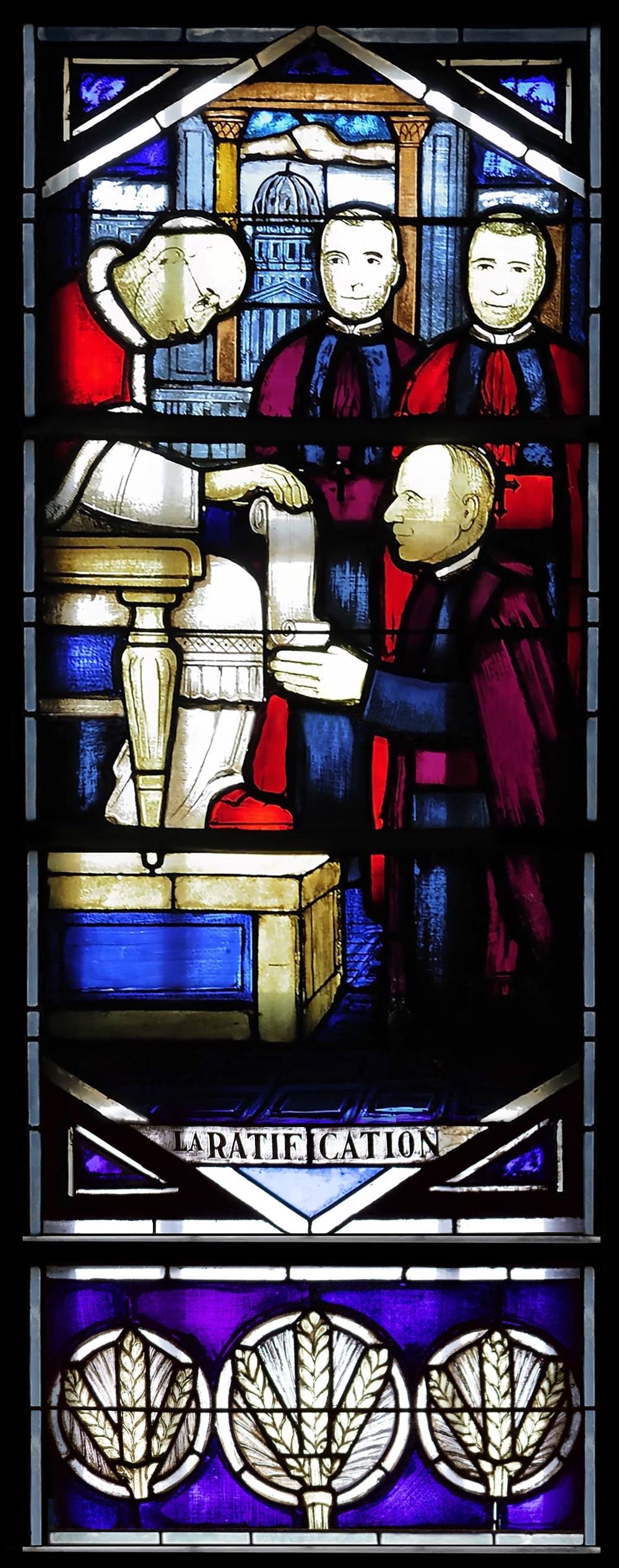
The Our-Lady-of-the-Assumption Cathedral, an impressive symbol of Acadian history, was named “The Monument of Acadian Recognition” by its very first archbishop, Mgr L.-J.-Arthur Melanson. In more ways than one, the large glass windows that tower over the transept’s scenery are one of the pieces that best exemplify this recognition. Both the Acadian people’s survival and their unshakeable faith in Mary, patron saint and protector of Acadia, are immortalized in this work.
East of the transept, the large glass windows highlight the religious history of Acadia: its institutions and the individuals who left a mark on the characteristic faith of the Acadian people. Westward shines the general history of Acadia: the suffering and vitality of its people from their beginning up to a more modern era. Exploring these windows, which are at times nicknamed “Acadian graphic novels,” allows a deeper understanding of the stories they tell.
This series of narrative windows was made possible by the efforts of French glass artist Auguste Labouret, architect Louis Napoléon Audet, and two sisters of the Notre-Dame-du-Sacré-Cœur congregation, as well as contributions from Archbishop L.-J.-Arthur Melanson as he lay in his deathbed. Pioneers and founders of Acadia, regardless of gender, appear on these artworks, based on original paintings by sisters Marie-Léonide (Gertrude Godbout) and Marie-Agnès (Edna Duguay).
From a technical standpoint, these pieces are the traditional form of stained glass: a (relatively) thin piece of glass, tinted and lined with lead, created by Labouret and based on the sisters’ original drawings. Each window is made up of 10 scenes, all with their own details, and each illustrating a particular moment in Acadian history. The windows are both 18 panes, divided into six rows of three. The rows 2 through 5 are each their own triptych, or a composition made of three elements that together make an individual art piece.
On October 8, 1941, the stained glass windows were installed in the Cathedral’s transept, following Labouret and Audet receiving the Archbishop’s approval. Archbishop L.-J.-Arthur Melanson passed away on October 23rd; his supervision of the installation of the figurative windows was his last, and certainly most distinctive, material contribution to the Monument of Recognition he himself christened.
Transcription
Cette vidéo [sans son] présente un lent panoramique de l’intérieur d’une église, se concentrant sur un ensemble de vitraux colorés qui dépeignent l’histoire acadienne. Ces vitraux illustrent des moments clés tels que la fondation de l’Acadie en 1604, des scènes religieuses importantes et des événements poignants comme la déportation, symbolisée par la séparation et la détresse. Les vitraux commémorent également l’adoption de symboles nationaux. Une fresque murale sur le mur de gauche est ensuite révélée.